
Pros and Cons of Debt Consolidation
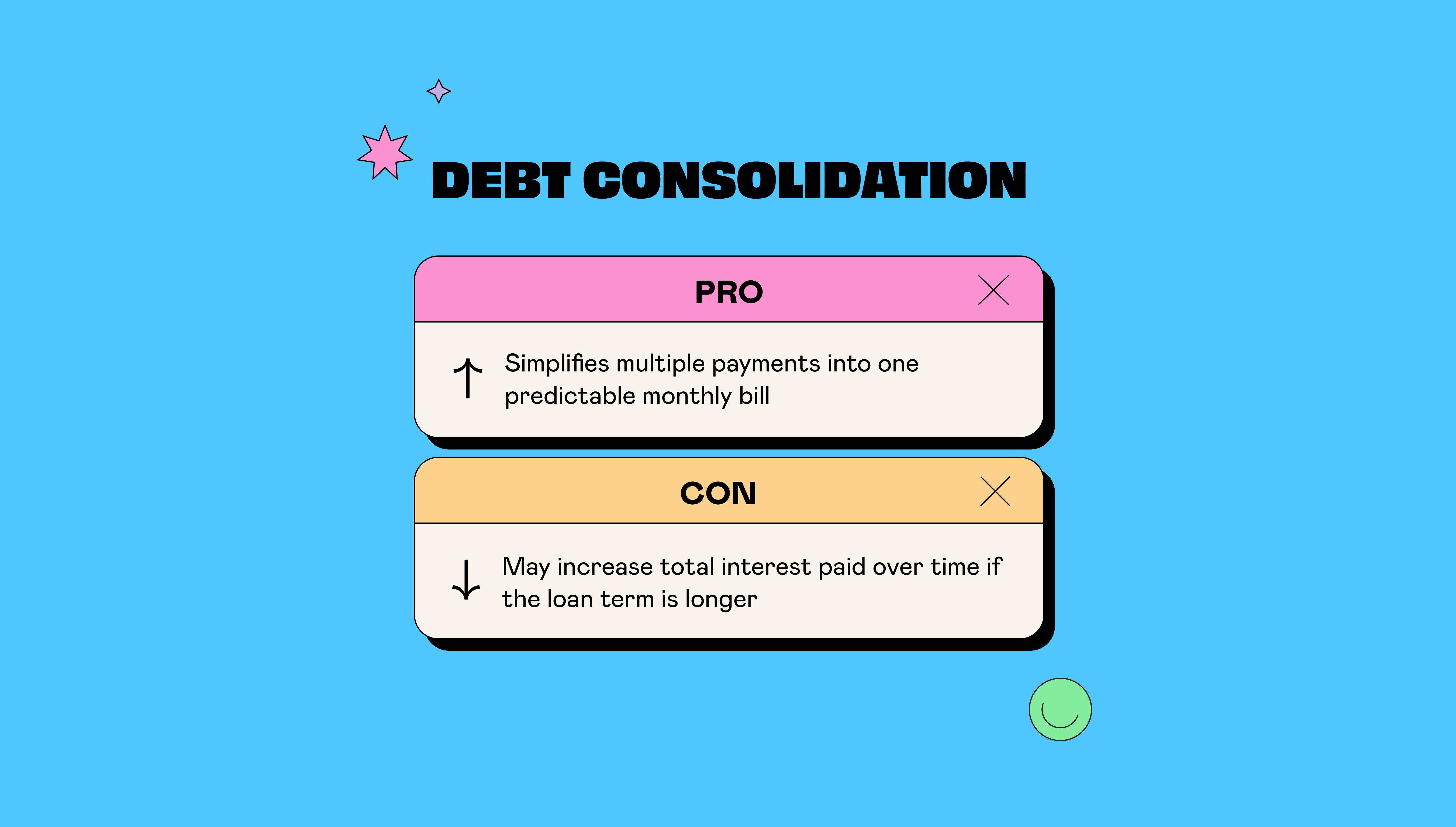
Debt consolidation can be an appealing way to manage your debts and simplify your financial life. It lets you combine multiple debts into one loan with a single monthly payment, and it may reduce the total interest you pay.
But like every financial decision, there are pros and cons. Understanding both sides of debt consolidation can help you decide what makes the most sense for your situation.
The Pros of Debt Consolidation
Debt consolidation loans offer several benefits that can make managing your money easier and less stressful. Here are some key advantages:
- Lower interest rates: Consolidation may reduce the interest you pay, which can make repayment more manageable and save you money over time.
- Single monthly payment: Combining your debts into one predictable monthly payment can reduce the stress of tracking multiple due dates and loan details.
- Improved credit over time: When you make payments on time and are consistent, you can strengthen your credit history and may improve your credit*.
- Fixed repayment timeline: Consolidation loans have a set payoff date. This gives you a transparent path to becoming debt-free.
- Reduced financial stress: Simplifying your payments into one loan can help you feel more in control and stay focused on your bigger financial goals.
Potential to pay off debt faster: Because the interest rates are lower, and your payments are combined into one monthly payment, you have the potential to pay off your loans quicker and become debt-free sooner.
The Cons of Debt Consolidation
Debt consolidation has some great advantages, but you need to consider the potential drawbacks before deciding on your debt management strategy:
- Potential fees: Depending on the lender, your consolidation loan may include an origination fee. Make sure you review all costs before you decide.
- Credit requirements: You usually need at least fair, and often good, credit to qualify for the best rates. That can limit access for some borrowers.
- Risk of accumulating more debt: If you continue spending on the debts that you are consolidating, especially credit card balances, you could end up with more debt than when you started.
- Longer repayment period: Consolidation can lower your monthly payment, but it may also extend how long it takes to pay off your debt compared to paying each balance on its own.
- Doesn't address spending habits: Consolidation can simplify the debt repayment process, but it may not solve the root cause of budgeting and spending issues that led to the debt.
Possible credit score dip: There is a chance that your credit score drops temporarily due to a hard pull on your credit for opening a new account, but consistent payment on the loan will ultimately help strengthen your credit score over time.
Balancing the Trade-Offs
If you are asking, “Should I consolidate my credit card debt?”, one of the most important steps is to weigh the benefits and potential drawbacks side by side for your particular situation.
Here is a summary of the common pros and cons of debt consolidation loans:
Pros
- Lower interest rates can reduce costs
- One easy monthly payment
- A clear payoff timeline can keep you on track
- May help you pay off debt faster
- Reduces stress and helps you stay organized
- Consistent payments may improve your credit*
Cons
- Origination fees deducted from loan funds (not an extra out-of-pocket cost)
- Requires good credit for the best rates
- Extended terms may increase total interest paid
- Risk of adding to existing debt if spending habits don't change
- Doesn't fix the fundamental money issues like spending habits
- May temporarily lower your credit score when opening a new account
What to Consider When Weighing Your Options
Is debt consolidation worth it? If you can stay disciplined, keep healthy financial habits, and make regular payments without taking on new debt, consolidation may be the right tool for you.
However, if the circumstances that contributed to your debt are still ongoing, such as unexpected expenses, income changes, or challenges with budgeting, consolidation alone may not fully resolve the issue.
Ask yourself:
- Can I afford the new monthly payments?
- Can I avoid running up my credit cards again after I consolidate?
- Can I create a plan I will actually follow and track?
Honest answers to these questions can guide you toward the best decision.
When Debt Consolidation May Make Sense
Remember, personal finance is personal. What may work for some may not necessarily work for all. Debt consolidation can be an excellent strategy for people in certain situations:
- High-interest debts: You are managing multiple high-interest debts, such as credit cards, and want to simplify your payments into one schedule.
- Using good credit: You have good credit and can qualify for a lower interest rate than what you pay now.
- Committed repayment plan: You are ready to make consistent monthly payments and stay on track with your plan.
- Motivation during repayment: You prefer the structure of a fixed-term loan and want the peace of mind that comes with a clear timeline for becoming debt-free.
- Reducing financial stress: You're looking to reduce financial stress by consolidating bills and avoiding missed payments.
Debt consolidation works best when you are motivated to achieve your financial goals, can make consistent payments, and stay committed to the plan.
When It May Not Be the Best Option
Debt consolidation is not the right strategy for everyone. It may not be a good fit if:
- If you can’t qualify for an interest rate that beats what you are currently paying because your credit score is low.
- If you're having trouble keeping up with minimum payments, a different type of debt solution, such as credit counseling or a structured repayment plan, may be more helpful.
- You are still struggling with spending and budgeting issues, which can increase your overall debt balance if you take on a loan.
- You want the single monthly payment, but the extended term would significantly increase your total interest costs.
- Your debt situation may be better managed through solutions such as credit counseling, debt negotiation, or debt relief.
Exploring other debt management strategies may yield better results if debt consolidation doesn’t seem like the right fit for your unique situation.
Alternatives to Debt Consolidation
There are several strategies for managing debt. Other approaches may be worth considering depending on your goals, lifestyle, and situation:
- Debt snowball method: Focus on paying off your smallest debt first while making minimum payments on others, then roll that payment into the next smallest debt.
- Debt avalanche method: Prioritize paying off the debts with the highest interest rates first.
- Credit counseling: Get professional help creating a debt management plan with potentially lower rates.
- Balance transfer credit card: Move debt balances to 0% APR promotional cards to save on interest temporarily.
- Debt settlement or relief programs: Negotiate with creditors to settle debts for less than the full amount owed.
Each strategy has its own pros and cons. For some people, consolidation can feel like a balanced approach because it combines simplicity with the potential for cost savings.
Next Steps to Simplify Your Finances
Debt consolidation can simplify your money management and help you regain control. The Payoff Loan™ by Happy Money is designed for credit card debt consolidation with competitive rates. Checking your rate is free, secure, and has no impact on your credit score.
*Credit scores are impacted by multiple factors, including payment history, credit utilization, length of credit history, and other financial behaviors. Individual results may vary.
Frequently Asked Questions (FAQ)
Yes, as long as you qualify for a favorable rate, you can commit to making consistent payments and avoid taking on any new debt.
The main mistakes are adding more debt to their existing credit cards, not comparing terms, extending repayment terms, which increases total interest, and continuing challenges with budgeting or spending.
Compare your current interest rates to the new consolidation loan rate. Look at the total interest you would pay, including any fees, and review the payoff timeline.
If the rate is lower and the payoff timeline fits your goals, consolidation may help you save.
Yes. The most common combined types are credit cards, personal loans, and medical bills. Some lenders may specialize in other debt types.
Your credit report will show a hard inquiry because you are opening a new account, and that will cause a small, temporary dip in your score. But paying on time and being consistent will help improve your credit over time*.