
How to Rebuild Financial Confidence After a Setback
Financial setbacks can happen to anyone. A job loss, unexpected medical bill, major repair, or market shift can interrupt your plans and make it harder to feel confident about your next steps.
Many people have felt less financially confident since 2020, which shows how common these experiences are. A difficult moment doesn’t define your future. With supportive tools and clear information, it’s possible to regain confidence and move forward at your own pace in your financial life.
This guide provides practical steps to help you rebuild financial confidence, wherever you are starting from.
Understand the Emotional Impact of Finances
Money influences more than your budget. It can affect stress levels, sleep, relationships, and overall well-being. A recent Happy Money survey conducted by OnePoll found that 42 percent of U.S. adults with credit card debt feel concerned about their finances, often citing daily stress.
These reactions are common. Recognizing them is an important first step toward rebuilding financial confidence.
Acknowledge What You Are Feeling without Judgment
Feelings like worry, frustration, discouragement, or embarrassment often surface after a financial setback. Noticing them without self-criticism can make it easier to think clearly about what comes next.
Practice Self-Compassion as You Begin Again
Financial setbacks happen for many reasons, including circumstances outside of your control. Giving yourself room to reset can reduce stress and help you make more thoughtful decisions.
Identify What Triggers Financial Stress
Understanding what creates stress, such as surprise bills or irregular income, may heighten financial stress. Understanding these triggers can help you plan and feel more prepared.
Focus on Progress, Not Perfection
Financial confidence builds through small, consistent actions. Each positive step matters.
Build Steady Financial Habits
Once you understand how finances affect your emotions, you can start taking practical steps. Simple habits can reduce uncertainty and create a sense of control.
Review Your Financial Picture with Fresh Eyes
List your income, essential expenses, loan payments, and savings. Seeing everything in one place helps you understand your overall situation.
Set Small, Achievable Goals
Micro-goals help build momentum. This might include saving a small amount, tracking spending for a week, or making an extra payment when possible.
Recognize Every Form of Progress
Progress includes organization, awareness, and follow-through. These steps matter, even before balances change.
Rebuild Your Emergency Buffer
A starter emergency fund of $500 to $1,000 can lower daily stress. Over time, you can aim to save three to six months of essential expenses.
Automate What You Can
Automating savings or payments can simplify your life and help create consistency, even with small amounts.
Explore Your Options for Moving Forward
Understanding your options can help you choose a path that fits your situation and comfort level.
When a Personal Loan for Consolidation May Help
A personal loan may be helpful if you are managing multiple high-interest credit card balances and want a more predictable repayment plan.
- Predictable Payment Schedule: One monthly payment can be easier to manage than several due dates.
- Clear Repayment Timeline: A clear payoff period can reduce uncertainty.
- Potential Interest Savings: Some borrowers may qualify for a lower rate than their credit cards.
- Simplified Management: Consolidating balances into one payment can make daily money management feel simpler.
When Consolidation Might Not Be the Right Fit
A personal loan may not be a good option if your income is unstable, fees increase overall costs, or monthly payments would put strain on your budget. In those cases, other approaches like credit counseling or short-term hardships may offer better support.
Additional Supportive Options
If debt consolidation isn’t for you, other tools may help you get back on track.
Credit Counseling
Credit counseling is a nonprofit service that helps you review your finances and explore budgeting and repayment options. It can offer several helpful benefits, including:
- Budget Guidance: Counselors help you review your financial picture and identify your next steps.
- Personalized Recommendations: Strategies and guidance are tailored to your goals.
Structured Resources: Access to tools that support sustainable progress.
Financial Coaching
Financial coaching provides one-on-one support that focuses on building habits, skills, and confidence with your money. It can be especially useful in the following ways:
- Skill Development: Coaches help you build practical money skills such as planning, tracking, and consistent spending habits.
- Accountability Support: Regular check-ins help you stay focused and follow through on your goals.
Behavior-Based Insights: Coaching can help you understand patterns and build healthier habits.
Debt Management Plans (DMPs)
A debt management plan combines certain debts into one monthly payment through a nonprofit agency. A DMP may offer several benefits, such as:
- Combined Payments: One structured payment each month.
- Simplified Planning: Predictable schedules make financial tasks feel easier.
Administrative Support: The agency communicates with creditors.
Hardship Programs
Hardship programs are temporary adjustments offered by some creditors when you are experiencing short-term financial strain. These programs can provide:
- Temporary Payment Relief: Some payments may be lowered or paused.
- Short-Term Stability: Helps while you reassess your budget.
Variable Availability: Options differ by lender.
Sinking Funds
Sinking funds involve setting aside small amounts of money regularly for predictable future expenses. They can help you in several meaningful ways:
- Expense Preparation: Set aside small amounts regularly.
- Peace of Mind: Reduces stress around future costs.
Fewer Setbacks: Helps avoid new high-interest debt.
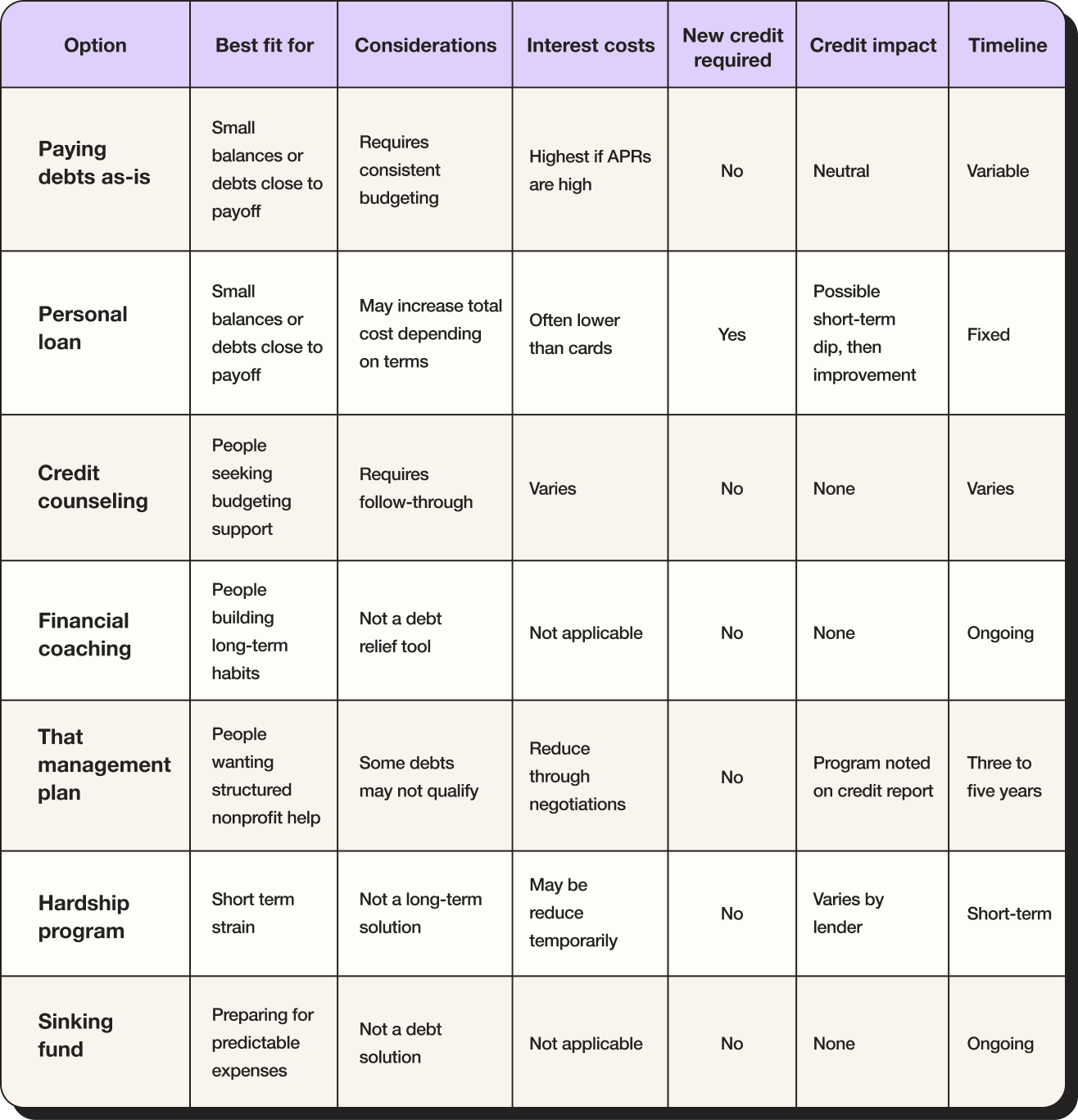
Comparing Your Options
There is no single right approach. The best choice depends on your situation, comfort level, and goals. Many people use a combination of strategies as their circumstances change.
Realistic Examples of Financial Progress in Action
Financial confidence grows through steady effort over time. Here are examples that show how people regain their footing after common setbacks.
Recovering after a Job Loss
After a layoff, Noah used his emergency savings to cover essentials while he searched for work. Once reemployed, he requested temporary hardship accommodations from his creditors.
When his income stabilized, he consolidated remaining balances with The Payoff Loan™ from Happy Money, which gave him one predictable monthly payment and a clearer path forward.
Managing Unexpected Expenses
Todd faced a $6,000 repair bill on top of existing credit card debt. He transferred the balances to a promotional zero percent card and set a strict payoff plan. This helped him stay organized and avoid additional interest.
Simplifying High-Interest Debt
Riley had $15,000 spread across multiple credit cards with an average APR of 21 percent. She qualified for a personal loan at 9.5 percent.
Although her monthly payment increased slightly compared to her previous minimums, she reduced her projected interest costs and paid off her balance in three years.
Balancing Caregiving & Personal Finances
After paying medical bills for his spouse, Jordan found himself with $15,000 in unexpected debt. Consolidation did not fit his goals, so he worked with a nonprofit credit counselor to build an eighteen-month repayment plan.
This repayment structure helped Jordan move toward his goal over time and pay off the debt in full.
Common Challenges That Can Slow Progress
On the road to financial recovery, it is normal to experience ups and downs. You may face irregular income, a tight budget, or emotional fatigue.
These challenges are a natural part of the process. Your situation will continue to get better with consistent action.
Bringing Your Plan Into Focus
Rebuilding financial confidence starts with understanding how setbacks affect both your emotions and your daily decisions. By recognizing stress triggers and taking small, steady steps, you can form an approach that fits your life.
As you explore tools such as consolidation, counseling, coaching, or savings strategies, you will feel more in command of your choices as you recover from setbacks. A plan shaped around your needs can help make each day feel more manageable.
Move Forward With a Clearer Path
If high-interest credit card debt is slowing your progress, a personal loan may help simplify repayment. The Payoff Loan™ by Happy Money provides one predictable monthly payment and a defined payoff timeline. Checking your rate is free and will not affect your credit score.