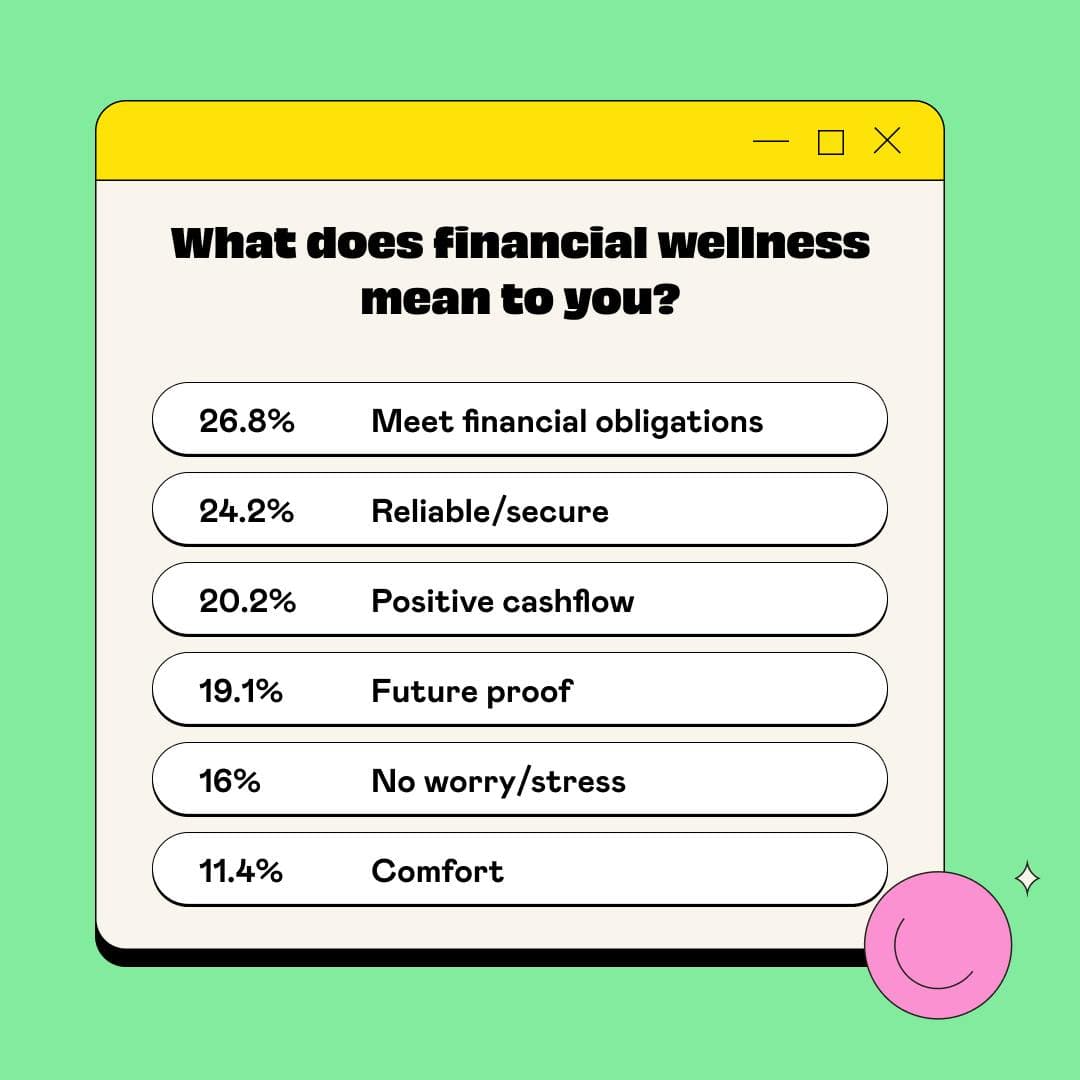
Money affects more than your bank account, it impacts your daily peace of mind, your stress levels, and even your relationships. When money feels complicated or uncertain, it can weigh heavily on your mental health.
The good news? Financial wellness isn't just about managing money. It's about building simple, repeatable habits that make money feel more manageable and give you the space to focus on what matters most in life.
But for many people, that sense of stability feels out of reach. Nearly half of U.S. adults (42%) with credit card debt say they’re concerned about their payments, according to a recent Happy Money survey, conducted by OnePoll. Of the 42% of respondents who report concern over their credit card payments, nearly half (42%) say this concern has had a direct impact on their mental health, and over a third (34%) say it has disrupted their sleep.
The good news is that there are tangible steps you can take to improve your financial well-being.
The guide below shares what financial wellness means, why it matters for mental health, and practical steps to build a foundation you can feel good about.